
iPhone 18 Pro Variable Aperture Camera: How f/1.5–f/4.0 Controls Depth of Field
Have you ever taken a photo of a friend and wished the background looked softer? Or tried to photograph a beautiful landscape but struggled to keep both nearby objects and distant details sharp?
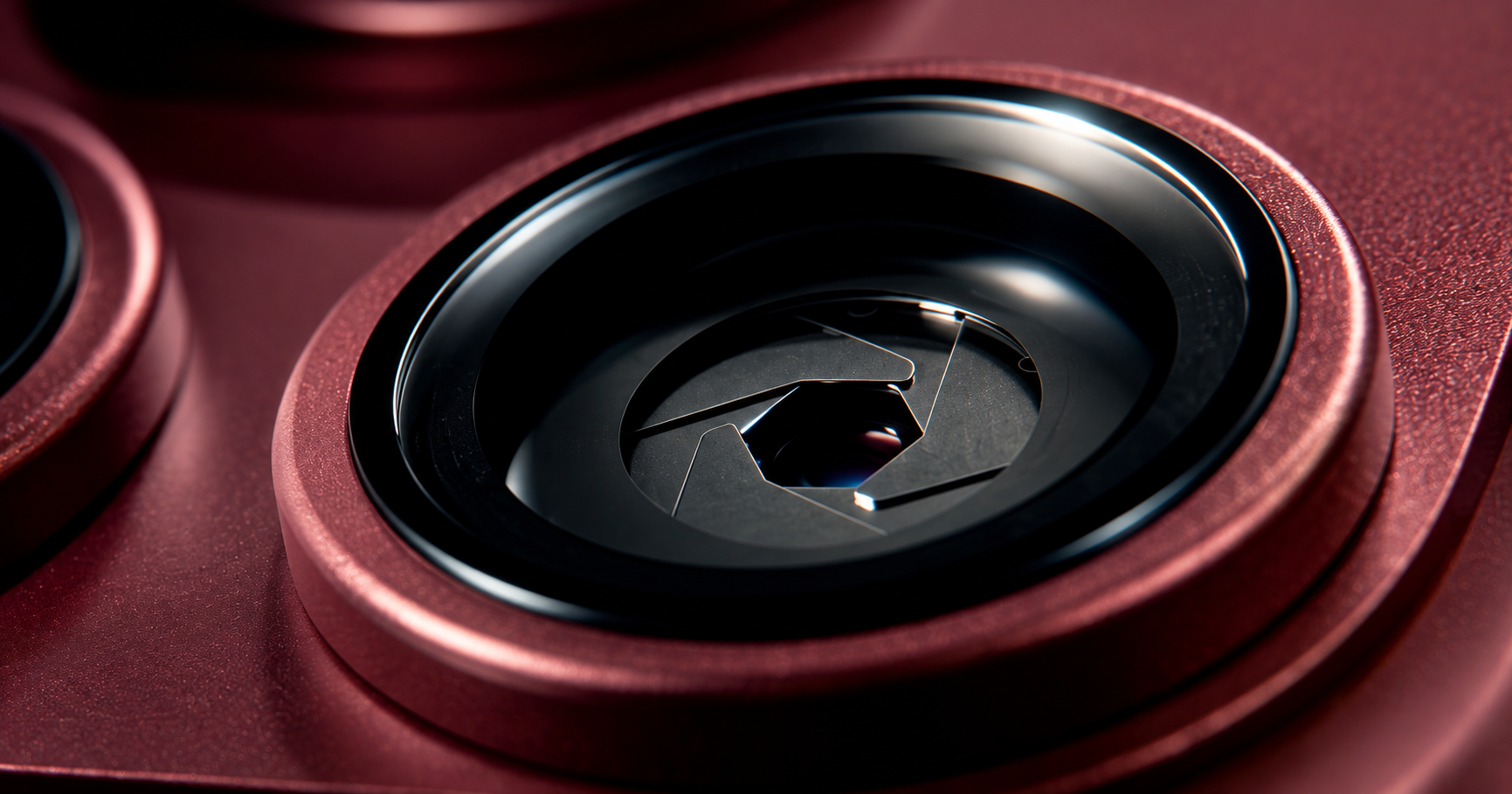
Your camera's aperture can help with these situations. It controls how much light enters the camera and affects how much of a scene appears in focus.
The iPhone 18 Pro introduces a variable-aperture system on its 48MP Fusion Main camera. It gives users more control over lighting and depth of field, making it easier to capture different types of photos. The camera offers four aperture settings: f/1.48, f/1.8, f/2.8, and f/4.0.
At Chips, we believe you do not need to be a professional photographer to understand these features. In this guide, we explain how variable aperture works, when to use each setting, and how it can help you take better photos.
If you are considering an iPhone 18 Pro in Kuwait, this guide will help you understand what makes its camera system useful.
What Is Camera Aperture?
Aperture is the opening in a camera lens that allows light to reach the sensor. Think of it like a window. A wider opening lets in more light, while a narrower opening lets in less.
Aperture is measured using f-numbers.
- A lower f-number, such as f/1.48, means a wider opening and more light.
- A higher f-number, such as f/4.0, means a narrower opening and less light.
Aperture also affects depth of field, which describes how much of a photo looks sharp from front to back.
A wider aperture can create a softer background, helping the main subject stand out. A narrower aperture can keep more of the scene in focus.
However, aperture is not the only factor. The distance between the camera and the subject, the distance to the background, and the camera's sensor also affect the result.
What Is Variable Aperture on the iPhone 18 Pro?
Most smartphone cameras use a fixed physical aperture. The camera can adjust other settings, but the lens opening itself stays the same.
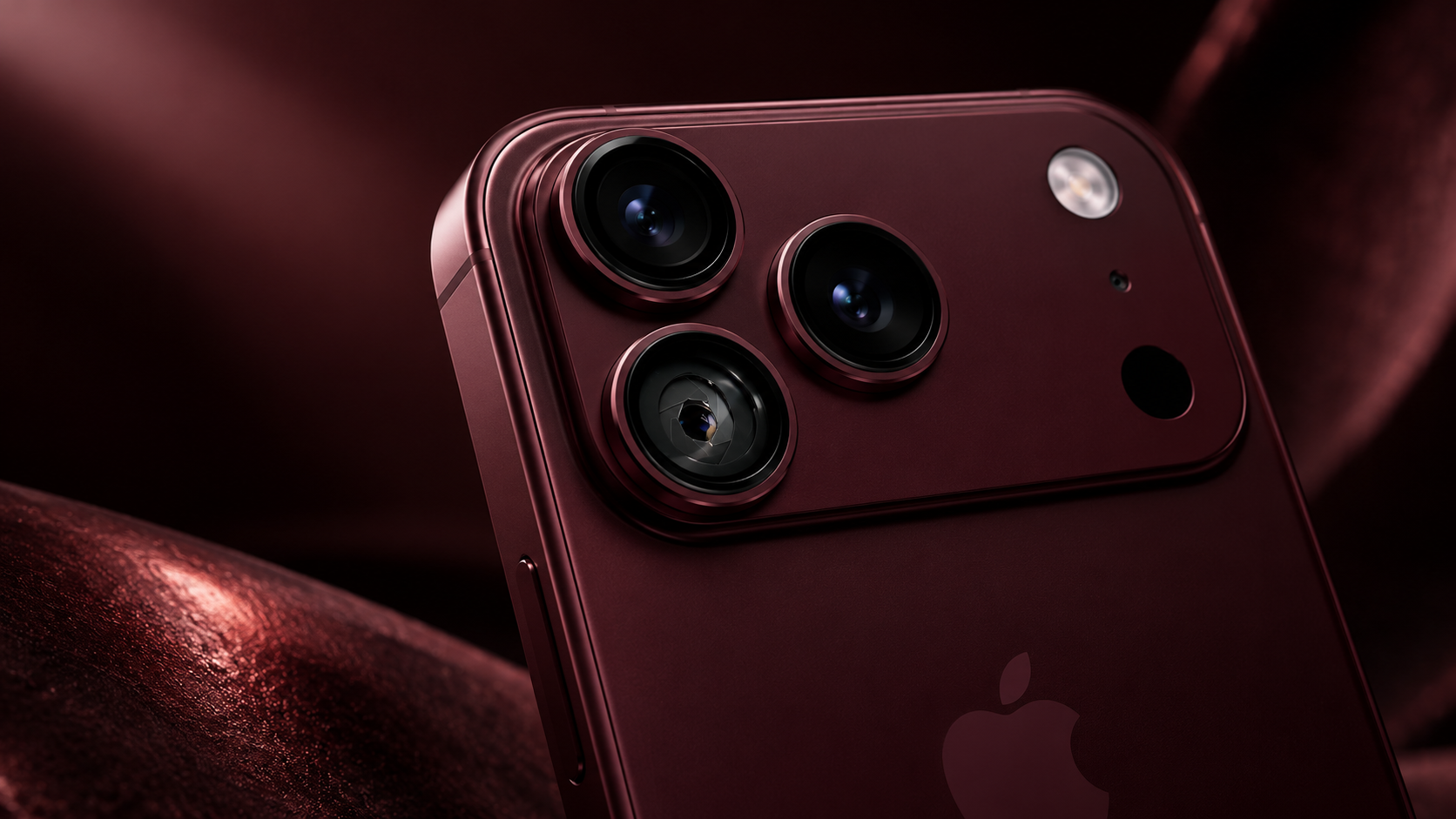
The iPhone 18 Pro takes a different approach. Its 48MP Fusion Main camera has a variable aperture that can change between four settings. The camera can adjust automatically, or users can use the available Pro controls for more creative control.
This gives you more flexibility when taking photos.
For example, you might use a wider aperture when photographing a friend in a dim café. You could choose a narrower aperture when photographing a building and want more details to remain clear.
You do not need to change the aperture for every photo. Automatic mode is suitable for everyday use, while manual controls are useful when you want to experiment.
How Does f/1.5–f/4.0 Affect Depth of Field?
The iPhone 18 Pro's widest setting is f/1.48, often rounded to f/1.5. Its narrowest listed setting is f/4.0. Each setting offers a different balance between light and depth of field.
1. f/1.48: Let in more light
This is the widest aperture setting. It lets more light reach the sensor and can create a softer background.
It is useful for portraits, close-up photos, and indoor scenes with limited light.
For example, when photographing a friend at a restaurant, f/1.48 can help the camera capture more light and make the person stand out from the background.
Apple says this setting offers around 50% better low-light performance under its stated comparison conditions. Actual results depend on the scene and how the camera is used.
2. f/1.8: A balance between light and depth
Apple describes f/1.8 as the default setting and a versatile balance between low-light performance and depth of field.
Try this setting for everyday photos, food, pets, and close-up subjects when you want the main subject to stand out without making the background too soft.
3. f/2.8: Keep more details in focus
The f/2.8 setting uses a narrower opening than f/1.48. It lets in less light but can help keep more of the scene in focus.
It may suit street photography, small groups, and scenes where the surroundings are an important part of the picture.
4. f/4.0: Create greater depth of field
This is the narrowest of the four settings. It can help keep more of the scene sharp, which is useful for landscapes, buildings, and photos with objects at different distances.
Apple also notes that f/4.0 can help create effects such as starbursts around bright lights when used with the camera's Pro controls.
When Should You Use Each Aperture Setting?
The best setting depends on what you are photographing.
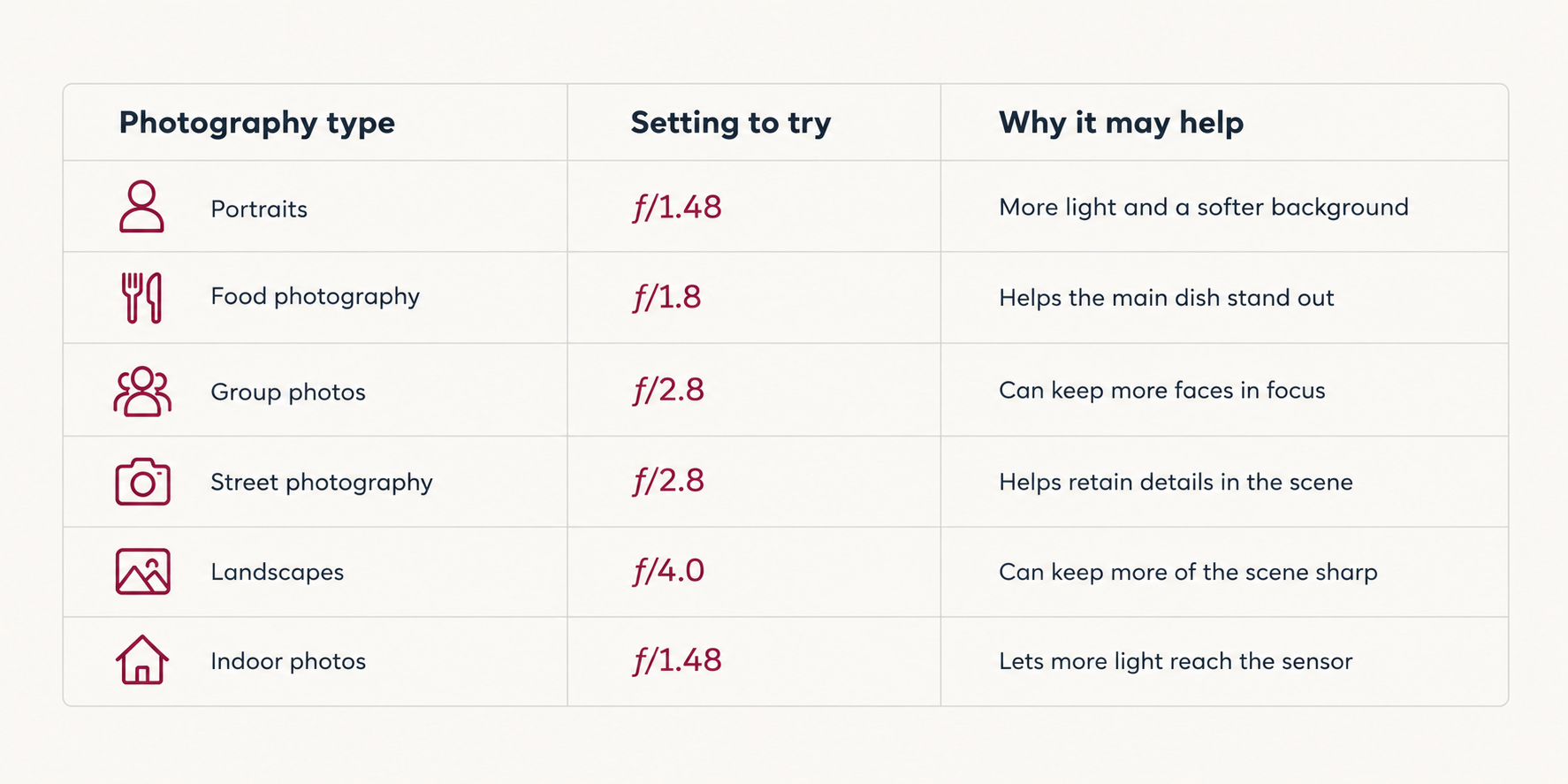
These are general suggestions. For group photos, for example, good positioning and careful focus are still important. A narrower aperture cannot guarantee that everyone will be sharp if people stand at very different distances.
Does Variable Aperture Replace Portrait Mode?
No. These features work in different ways.
Variable aperture changes the physical opening in the Main camera lens. This affects how much light enters and can change the natural depth of field.
Portrait mode uses software to identify the subject and create a blurred background effect. It also offers supported controls for adjusting the look of the blur.
Both features have their uses. Variable aperture gives you more control over the optical effect as you take a photo, while Portrait mode can help you create a portrait-style look through software.
For the best results, pay attention to the background and the distance between your subject and the camera. A simple background and good lighting can improve a photo just as much as changing a camera setting.
How to Change the Aperture on the iPhone 18 Pro
You can leave the camera on Auto or experiment with manual controls.
To try the feature:
1. Open the Camera app.
2. Open the camera controls.
3. Look for the Lens Aperture control.
4. Choose an available aperture setting.
5. Take a photo and compare it with one taken using another setting.
Apple lists Pro controls for lens aperture, shutter speed, and white balance on the iPhone 18 Pro. The exact controls you see may depend on your software version and camera mode.
Our tip at Chips: Take three photos of the same subject at different aperture settings. Keep your position and lighting the same, then compare the background and details. This is an easy way to understand how aperture changes your photos.
Is the iPhone 18 Pro Variable Aperture Camera Worth It?
The feature is most useful for people who enjoy photography and want more control over their images.
Its main benefits include:
- Better control over light: A wider aperture can help in dim indoor settings.
- Creative background effects: You can experiment with how much of the background appears sharp.
- More flexibility: Different settings can suit portraits, landscapes, and everyday scenes.
- A useful learning tool: You can explore basic photography without carrying a separate camera.
There are some limits. Variable aperture cannot replace good lighting, careful focus, or a steady hand. A narrower aperture lets in less light, which may make photos harder to capture in dark settings.
If you mainly take quick snapshots for social media, Auto mode may be enough. If you enjoy taking portraits, travel photos, food pictures, or creative images, the extra control can be useful.
Buying an iPhone 18 Pro in Kuwait
If you are looking for an iPhone 18 Pro in Kuwait, Chips offers a range of configurations through its online store. You can compare storage capacities, colors, regional versions, prices, and availability on the Chips iPhone 18 Pro collection.
Before ordering, check the exact model, storage capacity, regional version, SIM setup, and current stock. Prices and branch availability can change, so review the product listing before making your purchase.
At Chips, we want customers to choose a phone based on the features they will actually use. If photography matters to you, the iPhone 18 Pro's variable aperture is worth exploring alongside its other camera features.
Frequently Asked Questions
1. What does f/1.5 mean on the iPhone 18 Pro?
It refers to a wide aperture that lets more light reach the camera sensor. Apple's listed widest setting is f/1.48, which can also help create a softer background in suitable scenes.
2. Does f/4.0 make a photo sharper?
It can keep more of a scene in focus, especially when objects are at different distances. However, focus, movement, lighting, and camera position also affect sharpness.
3. Is variable aperture better than Portrait mode?
Neither is always better. Variable aperture changes the physical lens opening, while Portrait mode uses software to create a background blur effect. They offer different ways to shape a photo.
4. Can beginners use variable aperture?
Yes. Beginners can leave the camera on Auto and experiment with manual settings as they learn. Try a wider setting for a close-up portrait and a narrower setting for a landscape, then compare the results.
5. Is the iPhone 18 Pro good for photography?
The iPhone 18 Pro has a 48MP Main camera with variable aperture, a 48MP Ultra Wide camera, and a 48MP Telephoto camera. These features give users several ways to capture everyday moments and more creative photos.
Final Thoughts
The iPhone 18 Pro's variable-aperture camera gives you more control over two important parts of photography: light and depth of field.
Use f/1.48 when you want to let in more light or make your subject stand out against a softer background. Try f/4.0 when you want more of the scene to appear sharp. Most importantly, experiment with different settings and see which results you prefer.
If you are looking for an iPhone 18 Pro in Kuwait, visit the Chips online store to compare current models, storage options, and availability.
At Chips, we recommend choosing a phone based on the features you will use most. If photography is important to you, the iPhone 18 Pro's variable aperture is a useful feature to understand before making your decision.