
Google Fitbit Edge vs Google Fitbit Air: Which Google Fitness Tracker Fits Your Routine?
Choosing a fitness tracker is not only about counting steps. You may want to track your heart rate, understand your sleep, monitor your workouts, or build healthier daily habits. But not everyone wants a large smartwatch with a bright screen and constant notifications.
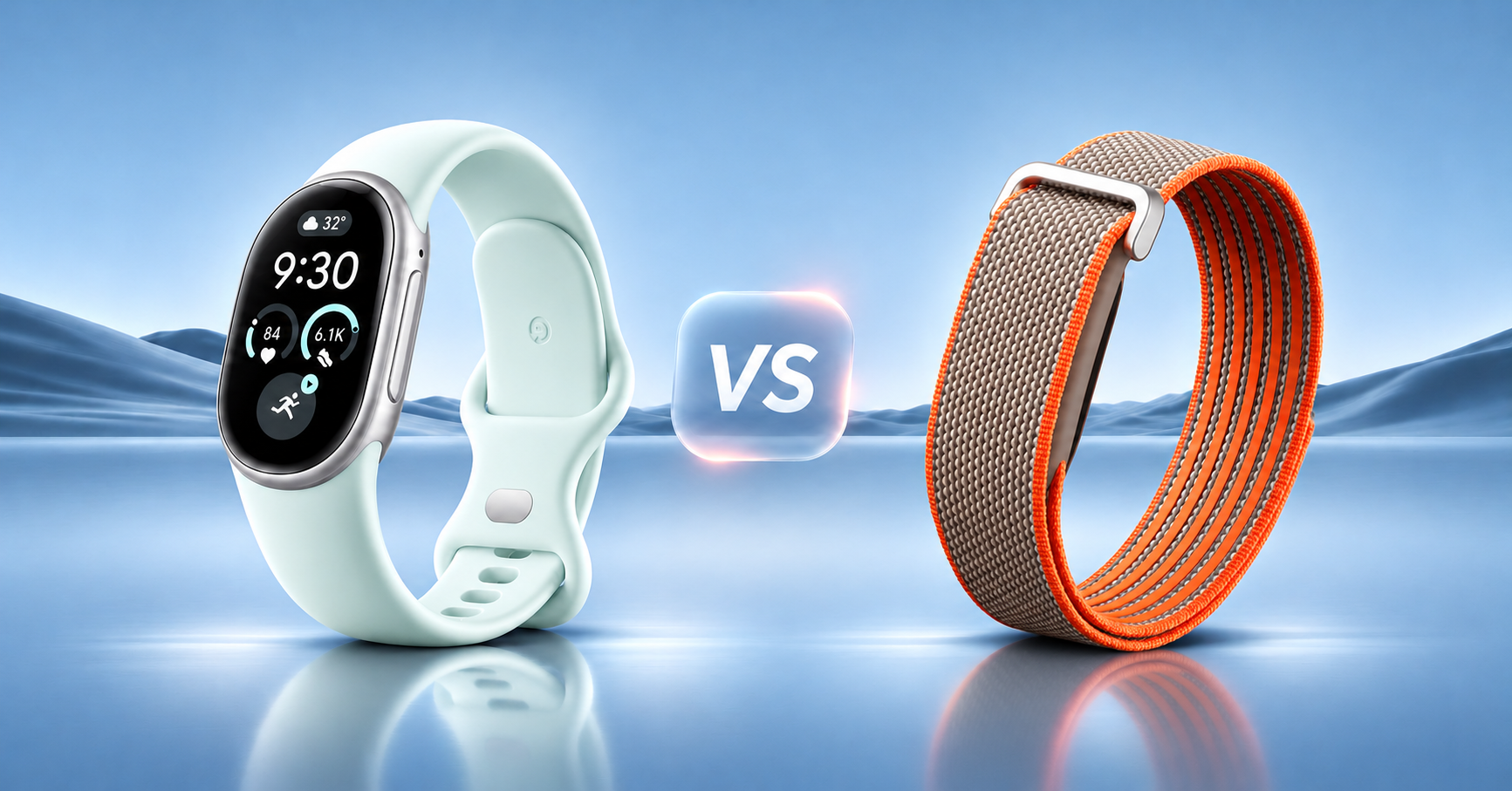
Google offers two different options for these needs: the Google Fitbit Edge and the Google Fitbit Air. Both are designed to help you understand your daily activity and fitness, but they offer different ways to track your progress.
The Google Fitbit Edge has a built-in display, physical button, GPS, and more workout features. The Google Fitbit Air takes a simpler approach with a lightweight, screenless design that focuses on activity, sleep, and health tracking. Both offer up to seven days of battery life under suitable usage conditions.
So, which one should you choose? This comparison will help you find the right match for your routine.
Google Fitbit Edge vs Google Fitbit Air: What Is the Main Difference?
The biggest difference is how you interact with each tracker.
Google Fitbit Edge (Best for Active Workout Tracking)
● Screen and physical button
● Built-in display
● GPS tracking
● On-wrist workout information
● More direct controls
Google Fitbit Air (Best for Simple Daily Tracking)
● Screenless design
● No display
● Lightweight design
● Sleep and recovery tracking
● Minimal distractions
The Edge is designed for people who want to see their fitness information directly on their wrist. You can check your workout progress, heart rate, and other details without constantly opening your phone.
The Air is made for people who prefer a tracker that stays out of the way. It collects activity and health information in the background, allowing you to review your progress through the Google Health app.
Neither tracker is automatically better. The right choice depends on whether you prefer on-wrist information or a simpler wearable experience.
Design and Comfort: Which One Is Better for Everyday Wear?
Comfort matters because a fitness tracker is most useful when you wear it regularly, including during sleep.
The Google Fitbit Edge has a slim, curved design with a recycled aluminum housing. It measures approximately 11.5mm thick and includes a Hybrid OLED display and a physical side button. Its curved shape is designed to sit comfortably on your wrist throughout the day.
The Google Fitbit Air has a smaller and simpler design. The tracker weighs just 5.2 grams without its band and 12 grams with the standard textile band. It is designed to feel light during workouts, daily activities, and sleep.
Here is how they compare:
|
Feature |
Fitbit Edge |
Fitbit Air |
|
Display |
Hybrid OLED |
No display |
|
Controls |
Touchscreen and side button |
Phone app |
|
Design |
Slim curved tracker |
Small, lightweight tracker |
|
Housing |
Recycled aluminum |
Recycled plastic |
|
Main focus |
Active fitness tracking |
Everyday wellness |
If you want to check your progress quickly during exercise, the Edge is more convenient. If you prefer a discreet tracker that does not look or feel like a smartwatch, the Air may suit you better.
Fitness Tracking: Which One Offers More Workout Features?
Both trackers help you understand your daily movement and exercise habits. However, the Edge offers more information directly on your wrist.
Google Fitbit Edge
The Edge supports more than 50 exercise modes. You can start workouts from the tracker and view live information such as:
● Heart rate and heart rate zones.
● Running pace.
● Workout duration.
● Exercise progress.
● Elevation changes.
It also has built-in GPS, so you can record outdoor routes without carrying your phone during supported activities. Its automatic activity recognition can identify up to 100 workout types.
Google Fitbit Air
The Air focuses on background activity tracking. It can monitor daily movement, heart rate, sleep, and other wellness measurements without showing information on your wrist.
It also supports automatic activity recognition. However, it does not have a built-in GPS or an altimeter. You should keep your phone with you if you need location-based workout tracking.
For someone who enjoys running, cycling, or structured workouts, the Edge offers more direct feedback. For someone who mainly walks, exercises casually, and wants to understand daily activity, the Air may be enough.
Health and Sleep Tracking: How Do They Compare?
Fitness is not only about exercise. Sleep, recovery, and daily activity also play an important role in overall well-being.
Both the Google Fitbit Edge and Google Fitbit Air track several useful health measurements.
These include:
● Continuous heart rate.
● Resting heart rate trends.
● Sleep duration and sleep stages.
● Heart rate variability (HRV).
● Blood oxygen (SpO₂) measurements.
● Skin temperature changes.
● Activity and movement patterns.
The Edge also has electrical sensors that support Google's ECG app for recording a 30-second heart rhythm assessment on the wrist. It also includes an altimeter for tracking elevation changes. The Air does not support the ECG app and does not have an altimeter.
Which one is better for sleep tracking?
Both can be used overnight.
The Air has an advantage if you dislike wearing a watch with a screen while sleeping. Its small size and lightweight design make it a simple option for people who want to track sleep without wearing a traditional smartwatch.
The Edge provides similar sleep information while also offering a display for checking your daily fitness data.
One Important Point: Fitness trackers provide estimates and wellness information. Their readings are not a replacement for medical tests or professional medical advice. Even features such as ECG and heart-rate alerts should not be used to diagnose a health condition yourself.
Battery Life: Which Tracker Lasts Longer?
Battery life is important if you want to track your activity throughout the day and monitor your sleep at night.
Both the Google Fitbit Edge and Google Fitbit Air offer up to seven days of battery life under suitable usage conditions. Actual results depend on settings, tracking activity, and how you use the device.
There is one important difference.
The Edge has a screen, and using its always-on display can reduce battery life to around two days. The Air does not have a screen, which helps it maintain its simple, low-power design.
|
Battery feature |
Fitbit Edge |
Fitbit Air |
|
Maximum claimed battery life |
Up to 7 days |
Up to 7 days |
|
Display impact |
Higher with always-on display |
No display |
|
Charging |
Magnetic charging |
USB-C charging cable |
|
Best habit |
Charge based on screen use |
Charge every few days |
If you want to check workout information on your wrist, the Edge offers more convenience. If you prefer fewer screen interactions and simple background tracking, the Air is worth considering.
Water Resistance and Everyday Use in Kuwait
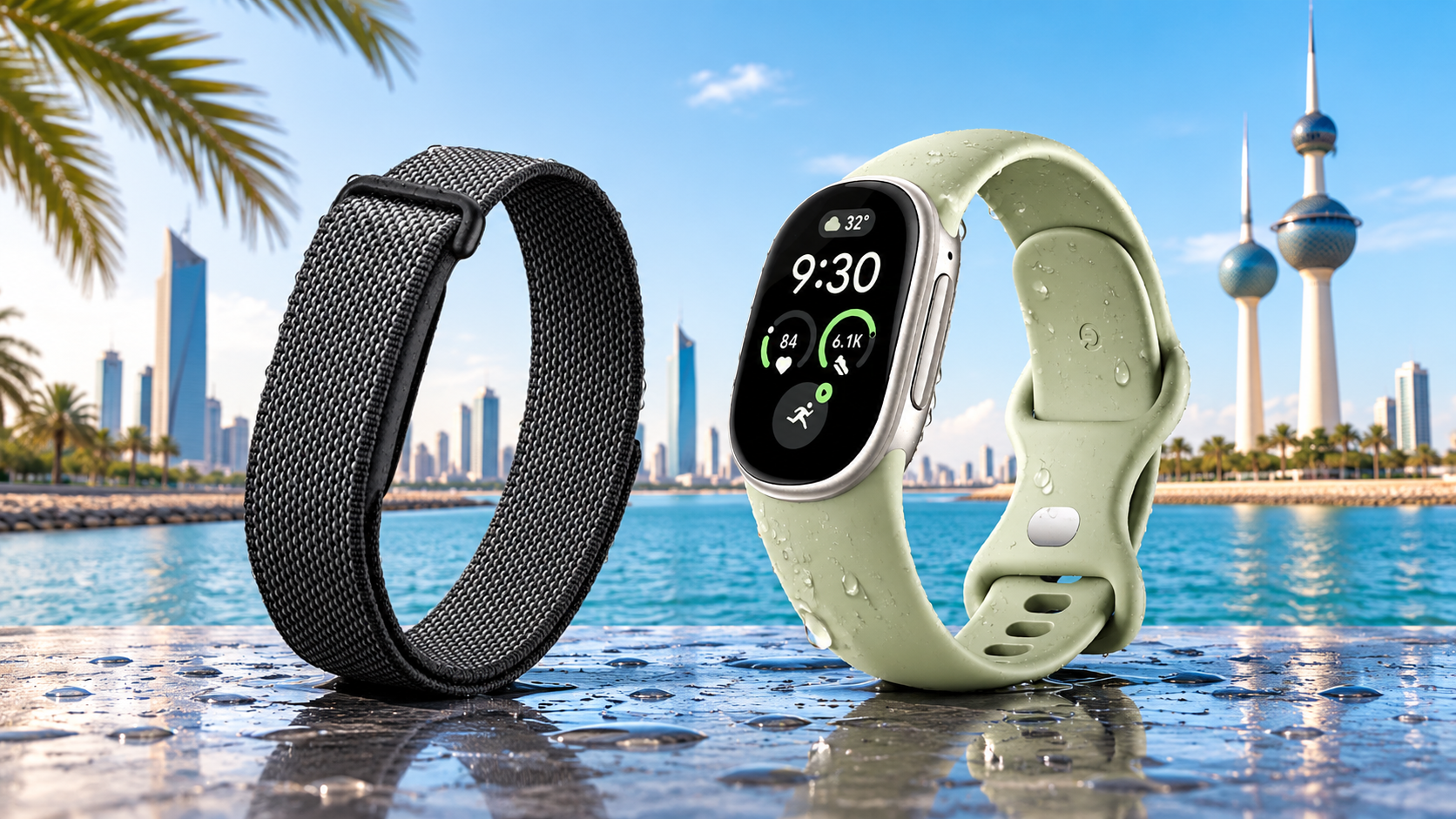
Kuwait's climate can influence how you use a fitness tracker. You may exercise indoors during hotter months, walk outdoors during cooler weather, or spend time at the gym and swimming pool.
Both trackers offer water resistance up to 50 meters under their stated specifications. However, water resistance does not mean they are completely waterproof.
The Edge may be useful if you enjoy outdoor workouts because its GPS and altimeter help record routes and elevation changes.
The Air may suit people who want a lightweight tracker for daily activity, sleep, and general fitness routines.
A few care tips apply to both:
● Dry the tracker and band after swimming or heavy sweating.
● Keep the band clean to reduce skin irritation.
● Avoid exposing the device to unnecessary extreme heat.
● Follow Google's care instructions before using it in water.
These habits can help keep your wearable comfortable and in good condition.
Which Google Fitbit Tracker Should You Buy?
Your daily routine should guide your decision.
Here is our recommendation:
|
Your needs |
Better choice |
|
Running and outdoor cycling |
Google Fitbit Edge |
|
On-wrist workout information |
Google Fitbit Edge |
|
Built-in GPS |
Google Fitbit Edge |
|
On-wrist ECG assessments (where supported) |
Google Fitbit Edge |
|
Lightweight sleep tracking |
Google Fitbit Air |
|
No screen or notifications |
Google Fitbit Air |
|
Lower purchase price |
Google Fitbit Air |
|
Simple everyday activity tracking |
Google Fitbit Air |
Choose Google Fitbit Edge if:
You enjoy structured workouts, running, cycling, and checking your performance while exercising. Its display, GPS, physical button, and additional workout tools make it a more complete fitness tracker.
Choose Google Fitbit Air if:
You prefer something lightweight and simple. It is a good option if you mainly want to monitor daily movement, heart rate, sleep, and recovery without looking at another screen.
Neither device is a full smartwatch replacement. If you want features such as contactless payments, a wide range of apps, and more complete phone controls, consider a smartwatch instead.
NOTE: ECG availability depends on your country. Although the Fitbit Edge has the required electrical sensors, Google's ECG app is available only in selected locations. Check Google's supported-country list before buying if ECG tracking is important to you. The feature is not intended for users under 22 and does not replace a medical ECG or professional diagnosis.
Where Can You Buy Google Fitbit Edge and Google Fitbit Air in Kuwait?
If you are looking for Google Fitbit Edge or Google Fitbit Air in Kuwait, Chips offers both models through its online catalog.
Chips lists several Google Fitbit options, including Edge in Obsidian, Canyon, Olive, and Satin Silver/Fog, along with Air in Obsidian, Lavender, Berry, and special editions. Stock can vary by color and branch.
You can compare prices, check availability, and explore the product details before ordering.
Final Thoughts
The Google Fitbit Edge and Google Fitbit Air are made for different types of users.
The Edge is a better match if you want more control over your workouts, built-in GPS, a display, and fitness information directly on your wrist. The Air is a better choice if you prefer a lightweight, screenless tracker that quietly monitors your activity and sleep.
Both offer useful fitness and wellness information, smartphone compatibility, and up to seven days of claimed battery life. The main difference is how much information and control you want on your wrist.
At Chips, we believe the best fitness tracker is the one that fits naturally into your daily routine. Think about your exercise habits, sleep-tracking needs, preferred design, and budget before making your choice.
Ready to compare the options? Visit the Google Fitbit collection at Chips to browse the Google Fitbit Edge, Google Fitbit Air, colors, special editions, and current prices.
Frequently Asked Questions
1. Is Google Fitbit Edge better than Google Fitbit Air?
The Edge is better for people who want built-in GPS, workout information on their wrist, additional fitness controls and ECG compatibility. The Air is better for people who prefer a lightweight, screenless tracker for everyday activity and sleep monitoring. ECG functionality depends on regional availability.
2. Does Google Fitbit Air have a screen?
No. The Google Fitbit Air has a screenless design. You view your activity, sleep, and other health information through the Google Health app on your compatible smartphone.
3. Does Google Fitbit Edge have built-in GPS?
Yes. The Edge has built-in GPS for tracking supported outdoor activities without relying on your phone's GPS.
4. How long does the battery last on Google Fitbit Edge and Air?
Both trackers offer up to seven days of battery life under suitable usage conditions. The Edge may last around two days with its always-on display enabled.
5. Do Google Fitbit Edge and Air work with iPhones?
Yes. Both support compatible iPhones running iOS 16.4 or later, as well as compatible Android phones. A Google Account and the Google Health app are required.
6. Can I swim while wearing Google Fitbit Air or Edge?
Both devices have a stated water resistance rating of up to 50 meters. However, water resistance is not the same as being waterproof. Follow Google's care and usage instructions.